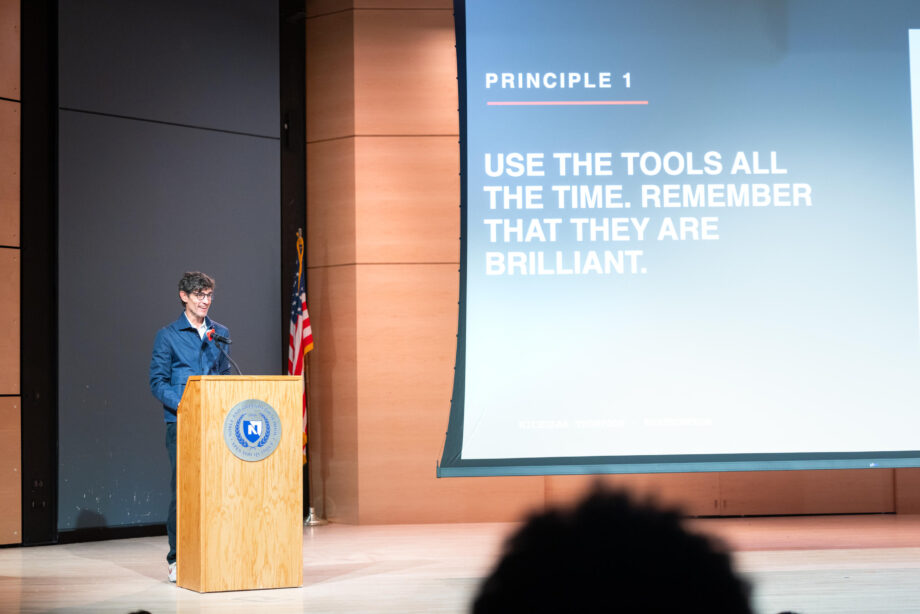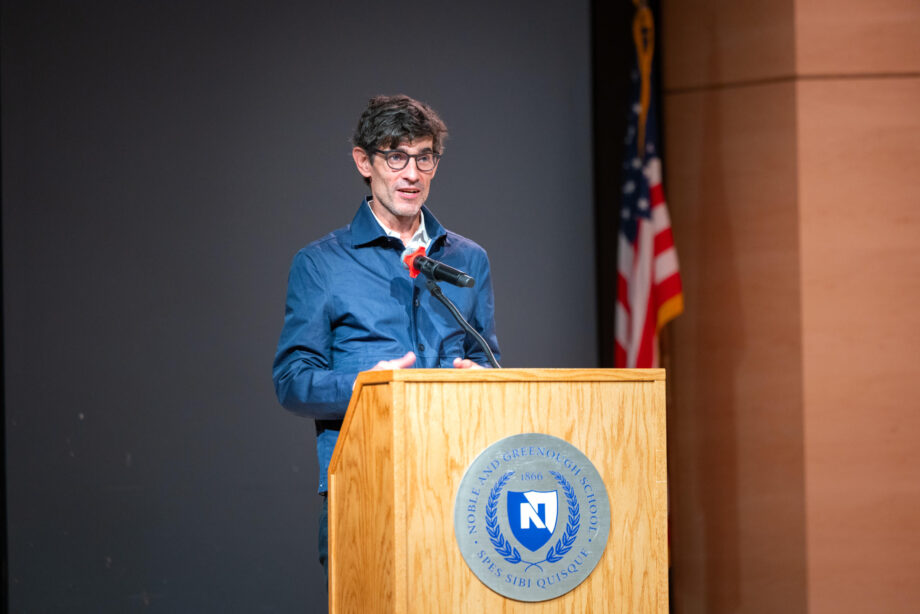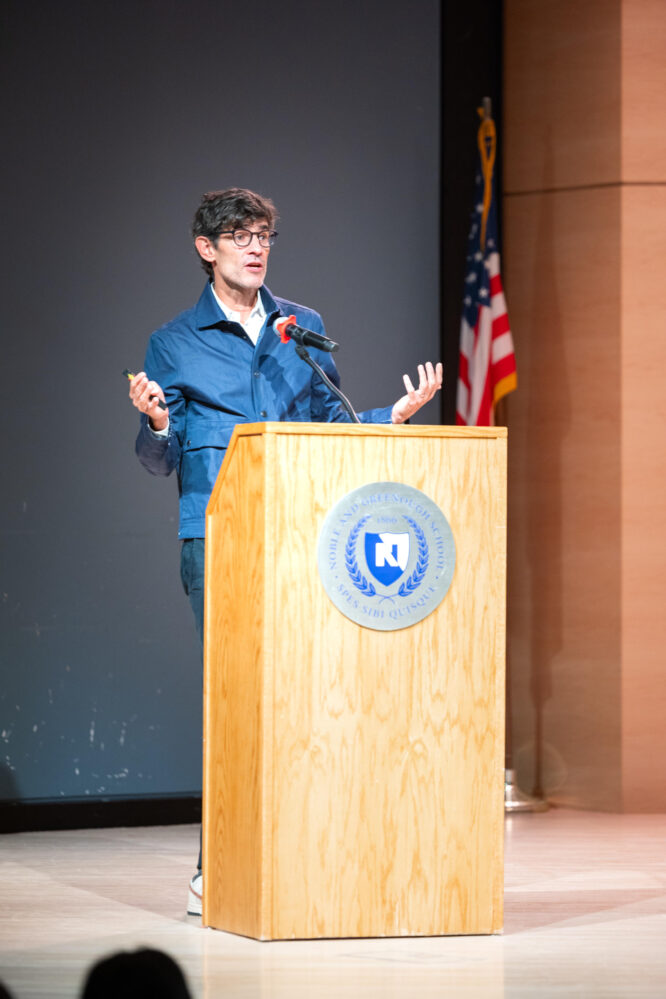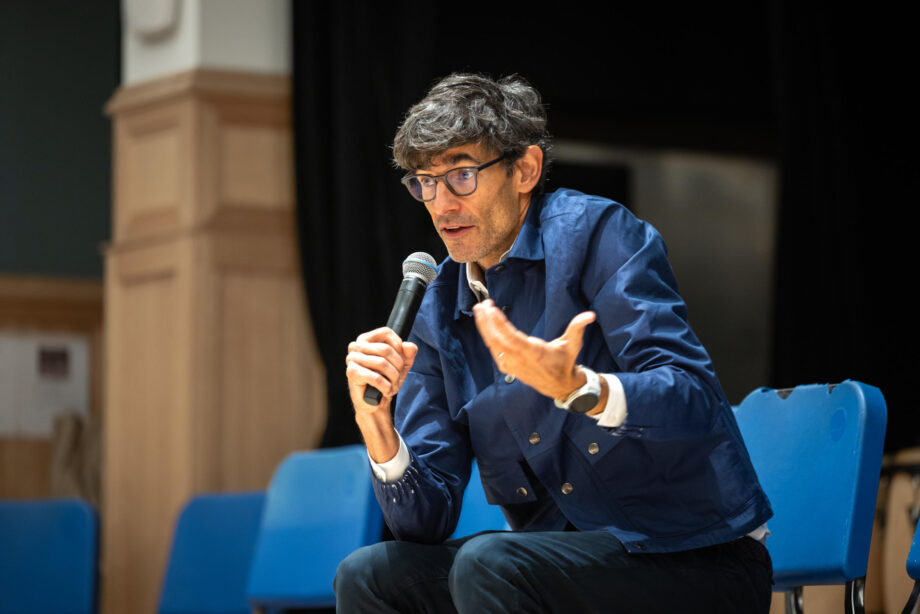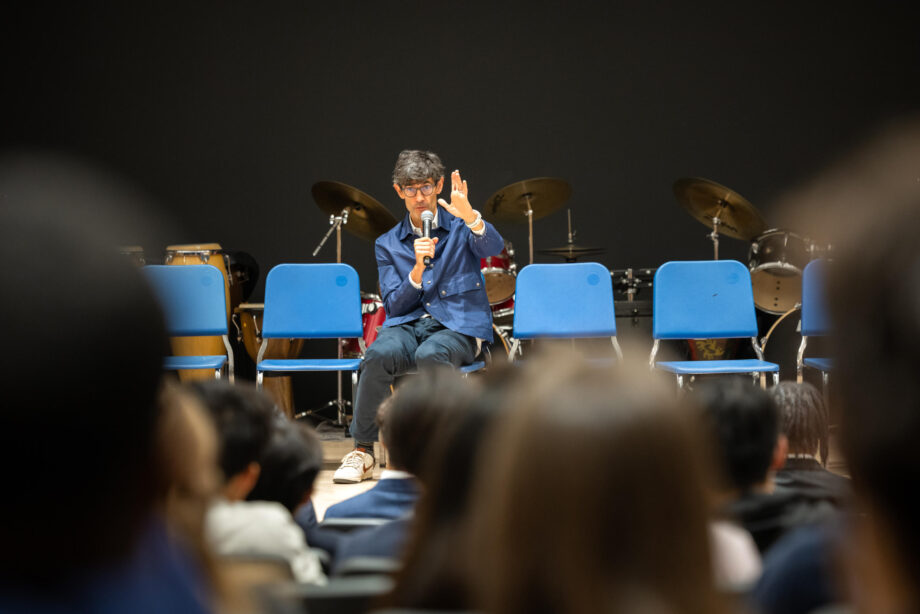



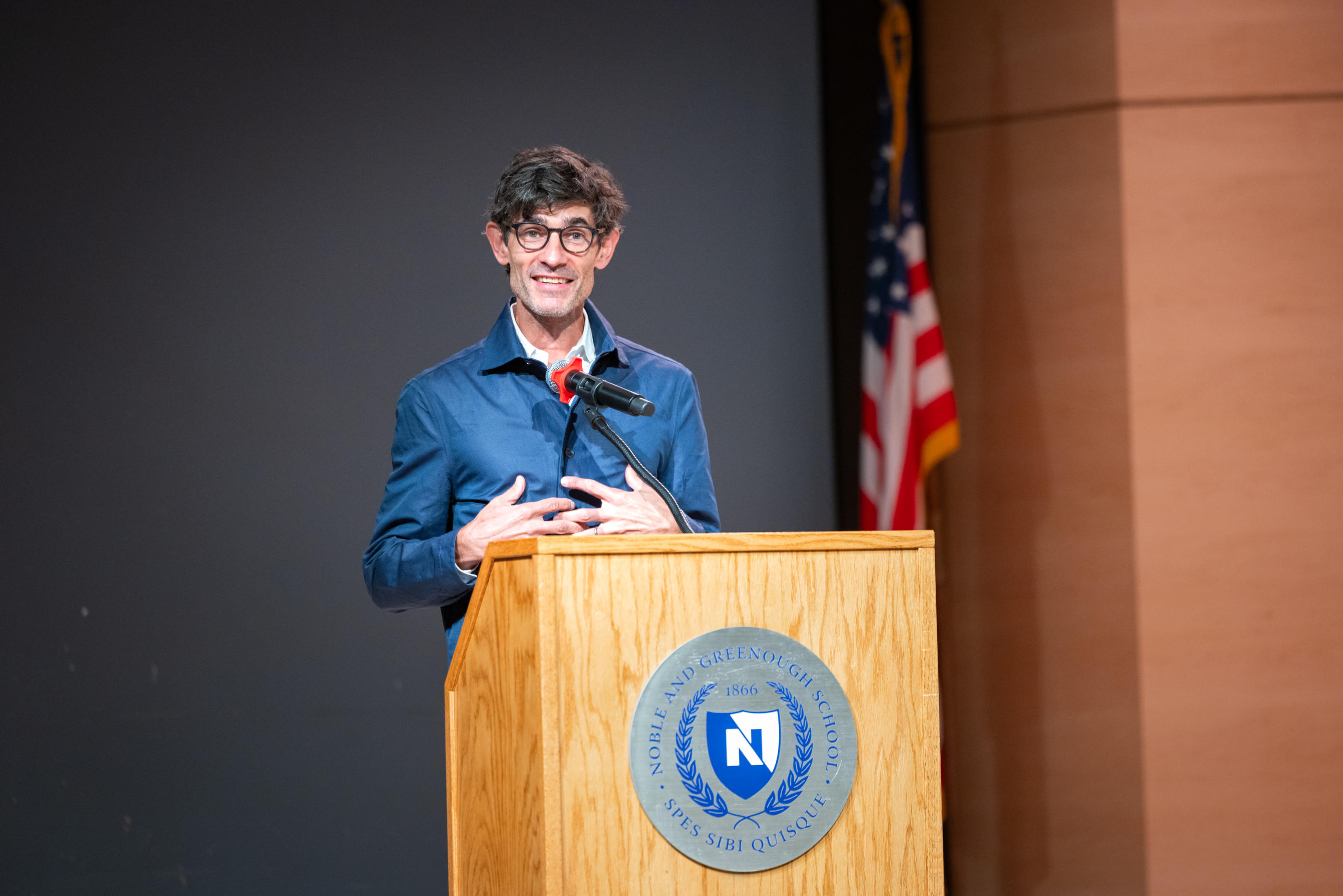
Each year, Nobles welcomes guest speakers to Assembly to share their stories with the community. This fall, one of several inspiring speakers on the docket was CEO of The Atlantic, Nicholas Thompson. When Thompson isn’t overseeing a major national publication, the former editor-in-chief of WIRED, host of “The Most Interesting Thing in AI” podcast, and author of the national bestseller, The Running Ground, can be found breaking national distance running records.
Thompson spoke to the community about living, learning, and working in the age of AI, the exciting possibilities that accompany the powerful tool, and the critical importance of using it responsibly while prioritizing one’s own learning in the process. To illustrate the point, he shared that not one sentence of The Running Ground was written using AI.
“One of the things that is key to me is that I’m a writer,” said Thompson. “I don’t ever want to lose that. We all know the things that we can do that models can’t do—that no system can do. Hold on to those things. Figure out what you love. Figure out what you’re passionate about, and do that.”
If I had grown at the rate that AI has been improving since I was born, I would not be six foot tall; I would reach the sun.
Thompson acknowledged that AI “can be the best tutor ever,” helping us learn things with unprecedented efficiency, but cautioned, “If you ever use AI to replace thinking and learning, you cut a corner and you make yourself weaker. It’s like you’re sending somebody else to the gym to lift the weights. It doesn’t do any good for you, so you’ve got to be very careful.”
He encouraged students to experiment with them—and often—to understand how to build and create new things, while reminding them that using AI to write papers and summarize books will not benefit them. “You retain nothing. You learn nothing,” he said. “You might get a great grade. Your brain just gets softer and softer, and you’ve done real damage.”
Throughout his talk, Thompson expressed his excitement about what AI is and what it has the potential to become, while underscoring the importance of understanding what AI models are not.
“These are not human minds,” he explained. “These are next-word prediction machines, and they can get into ruts. They make stuff up. It’s like an infinitely capable intern who lies to you a lot. Remember that.”
Despite those cautions, Thompson remained optimistic about AI’s future and the students’ ability to help shape it.
“Things are going to get very complicated,” he acknowledged, but was quick to add, “The world is interesting when things get complicated. … There will be incredible things that we build. This is gonna’ be fun, and it’s gonna’ be exciting. Don’t be a doomer … Be flexible and resilient. The world’s going to change a lot.”
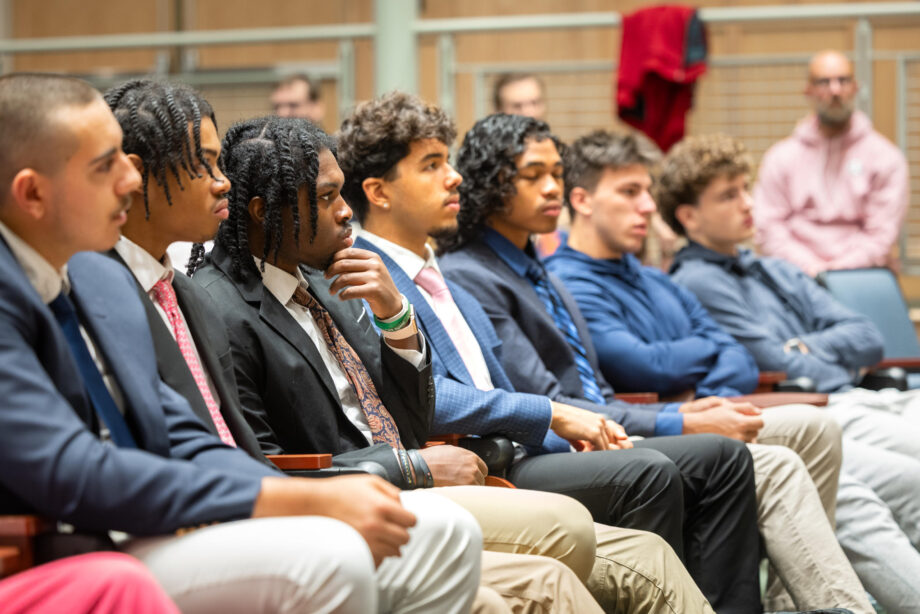
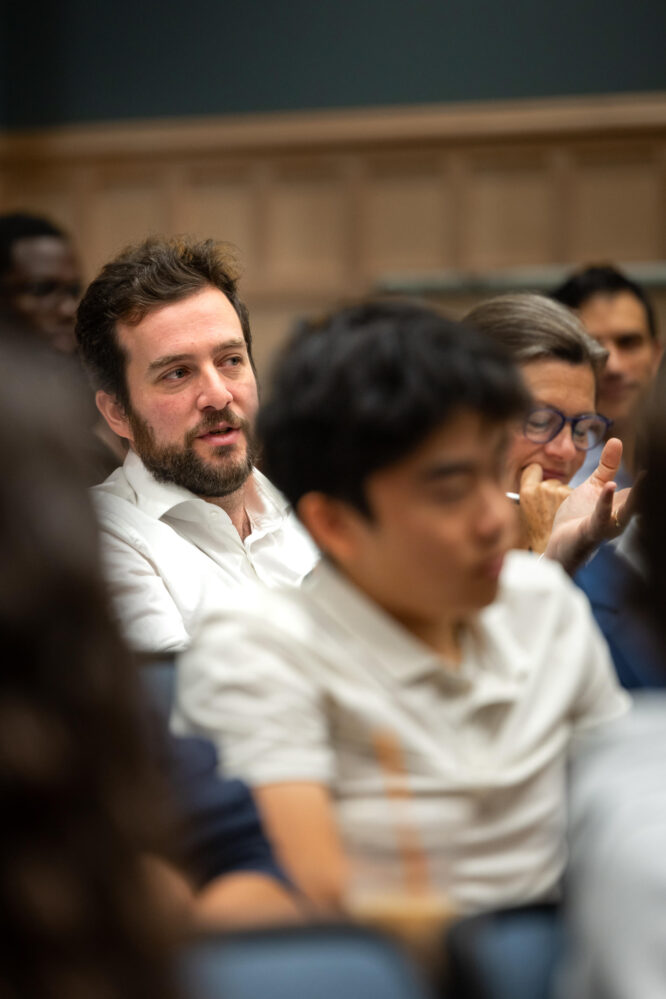
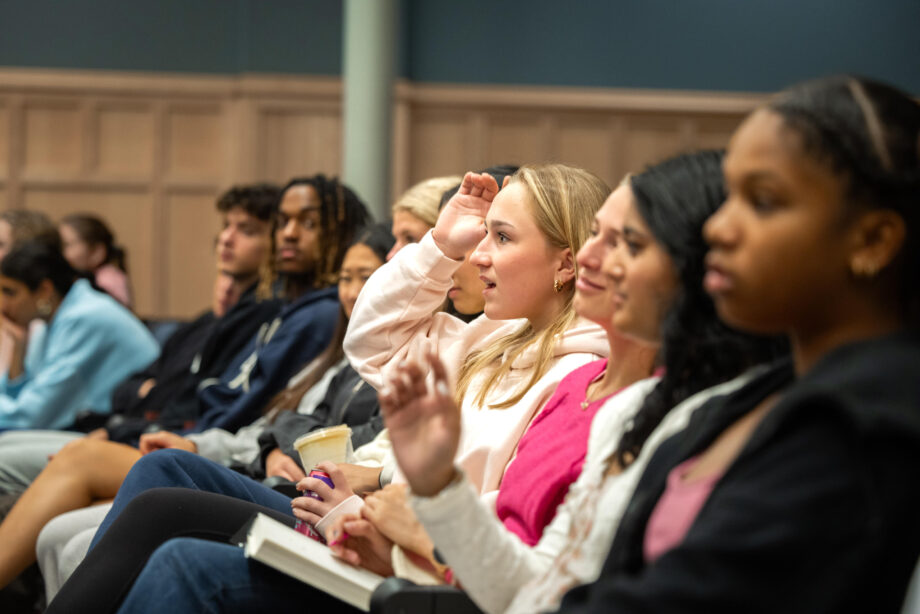
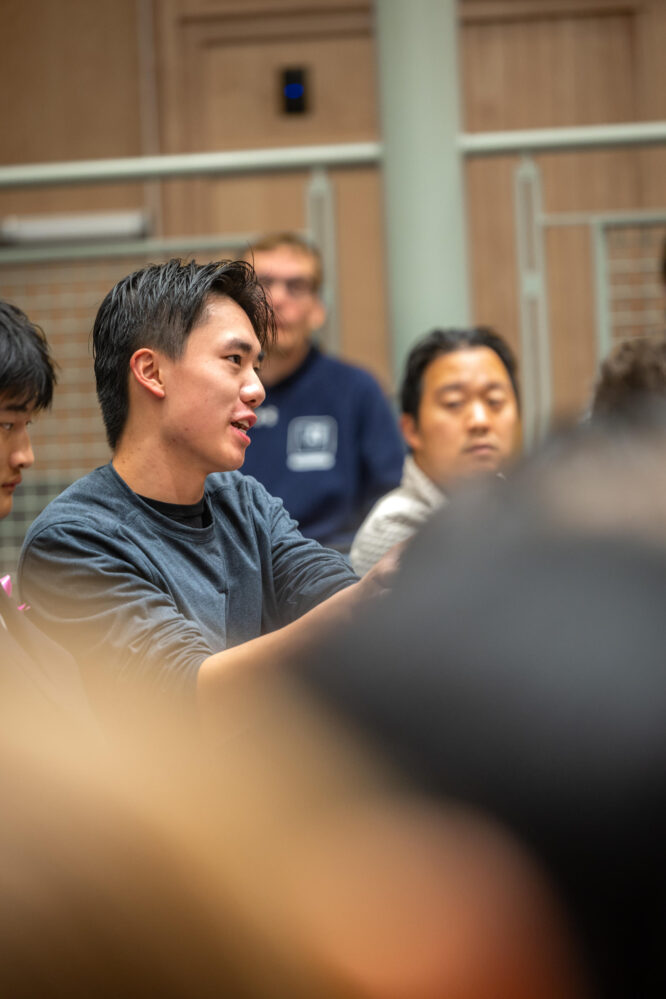
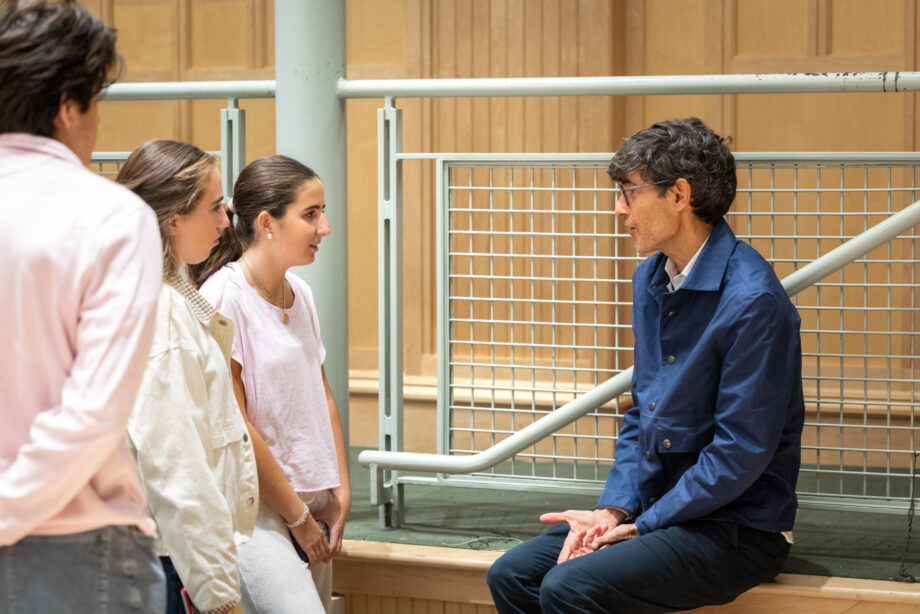
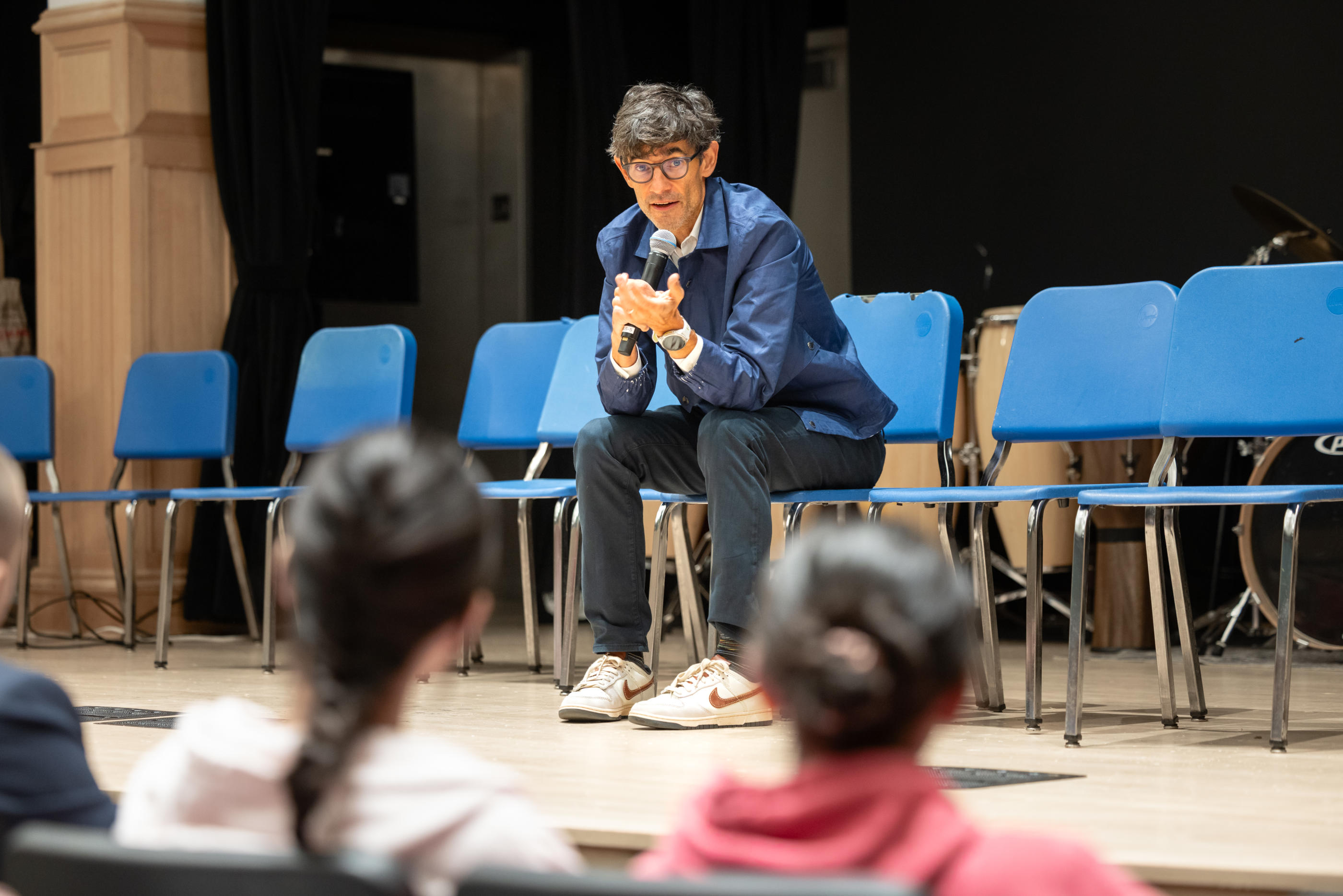
Following Assembly, Thompson met with a smaller group of students, faculty, and staff in Towles to continue the conversation. Students from across grade levels asked insightful questions about everything from the future of journalism to the impact of AI on society and technology, and the governance and regulation of this powerful tool.